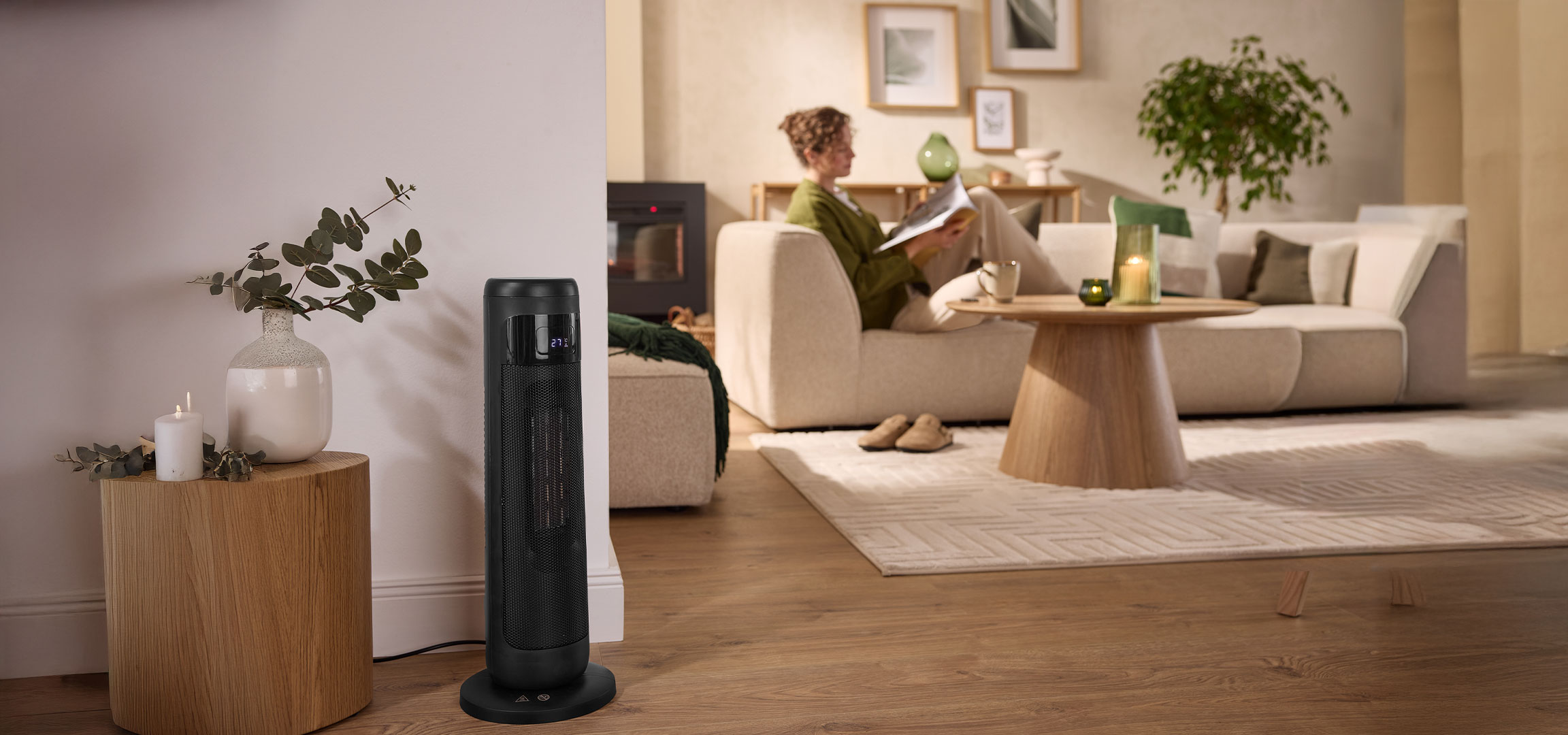
Get cozy: How to heat your home right with space heaters
Brr, feeling a bit chilly? You can easily change that: (Mobile) space heaters bring lightning-fast warmth – especially where traditional heating is missing. Infrared or convection, mini electric heater or fan heater? We’ll put space heaters to the test, share tips on how to heat properly, and show you how to beat the chill affordably and efficiently.
 AI
AIHeaters: Which Model Does What?
Being cold is no fun. That is why heaters were invented. They generate heat energy to warm up objects or people. This definition includes not only classic central heating systems, but also electric heaters, stoves, or power tools like heat guns.
In practice, the term heater mainly refers to easy-to-install electric appliances with a power plug that make rooms without heating cozier or provide you with an additional heat source if you need it. There are two main types:
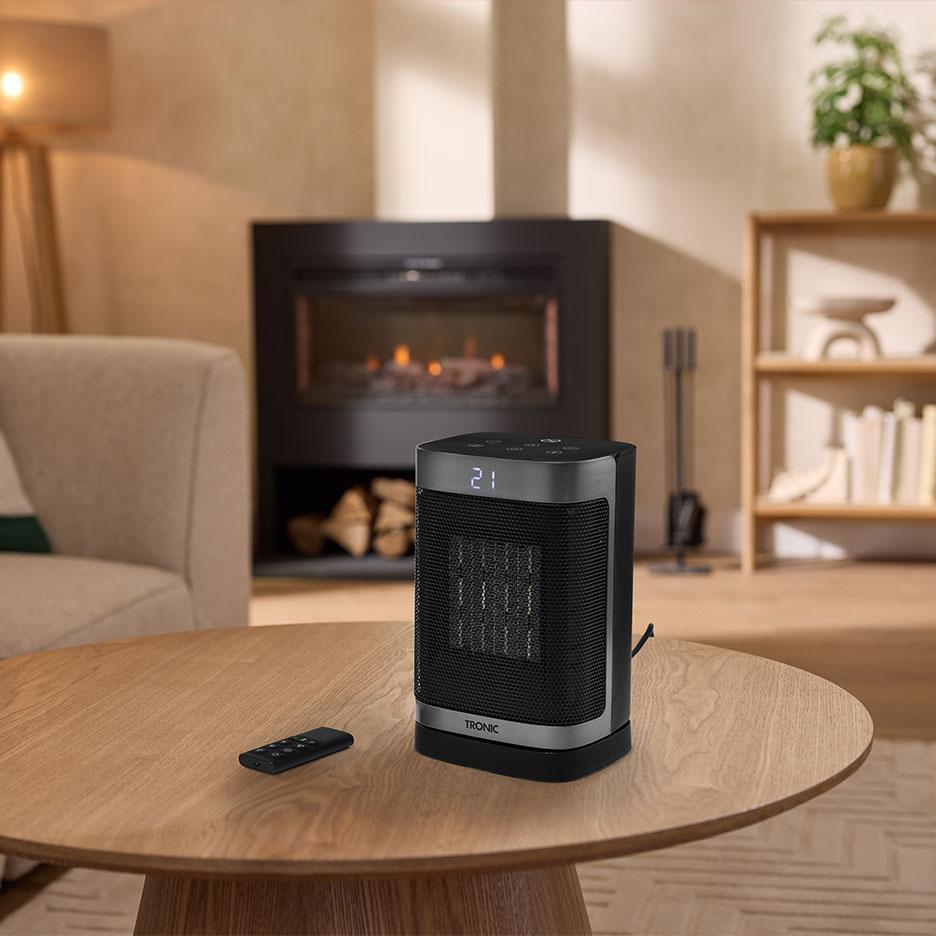
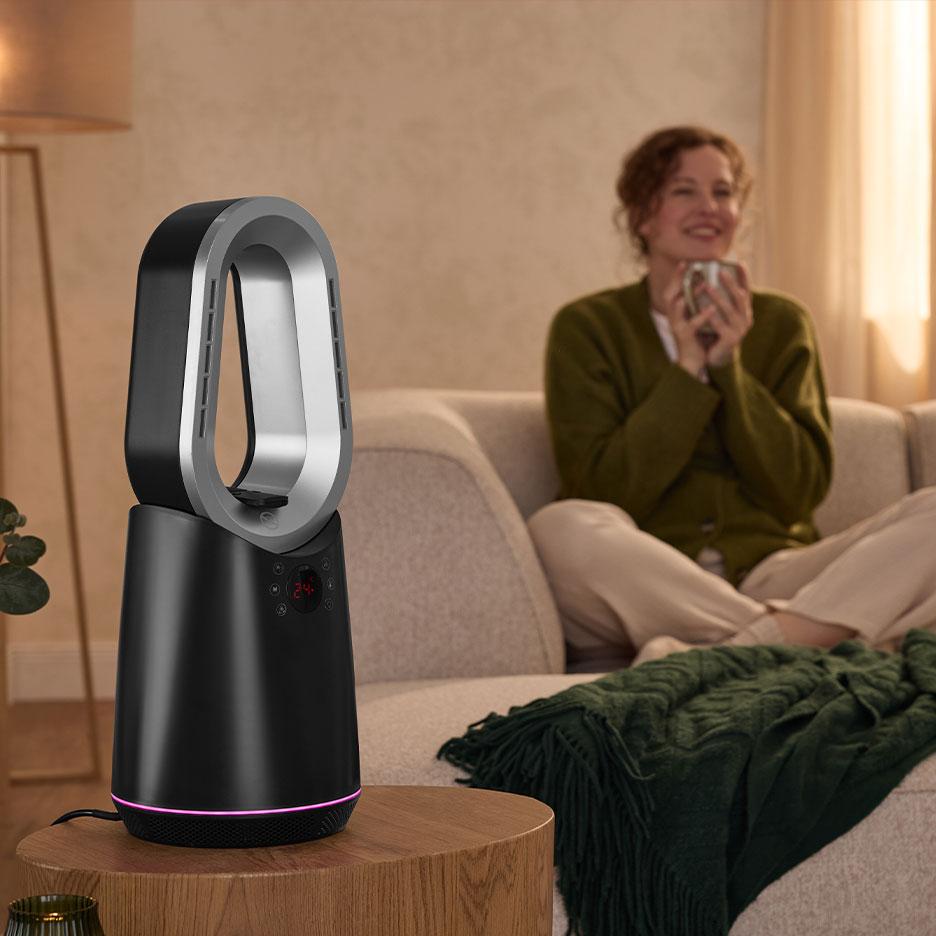
- Fan heaters and blowers are a mix of a heating module and a fan. They heat up drawn-in air and distribute it throughout the room via the fan unit. This heating of air molecules is called convection heat. Since the basic fan technology is built-in anyway, you can usually use fan heaters for both heating and cooling.
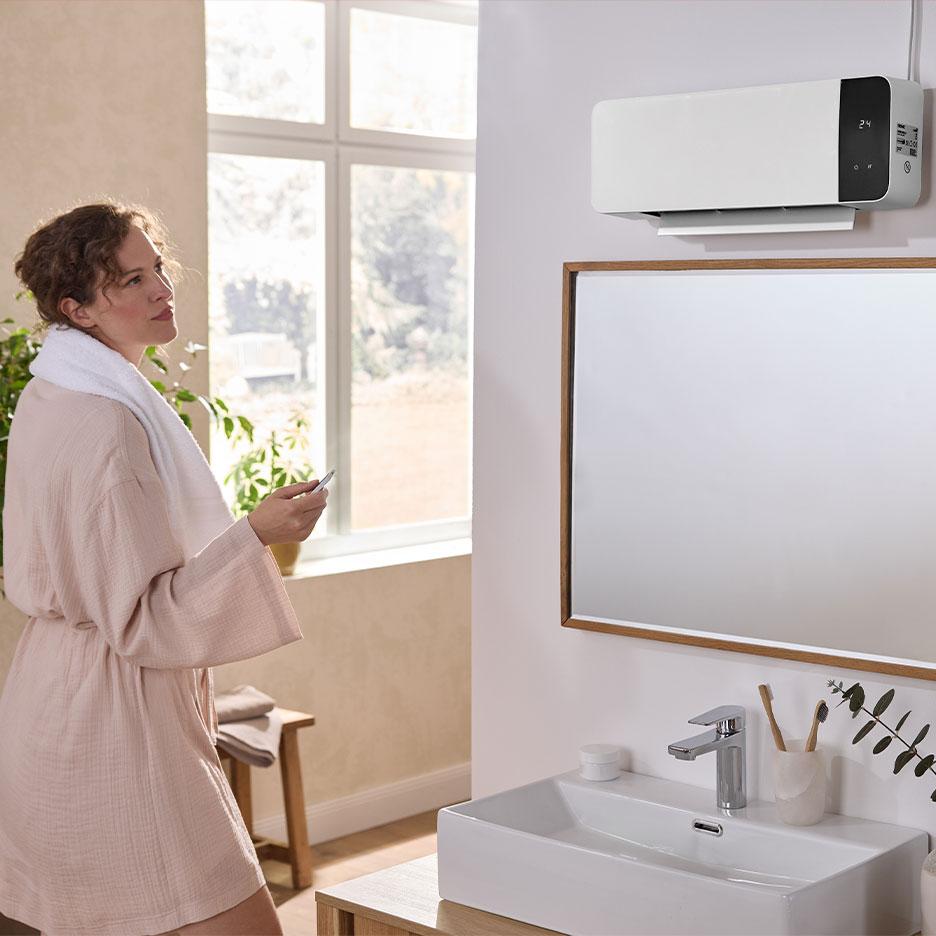
- Radiant heaters are infrared heaters that emit direct heat. They are available as compact wall-mounted heaters or as large heating panels. Infrared heat warms up the objects and people around it rather than the air. This warmth is perceived as more intense.
In a broader sense, radiator thermostats are also considered heating devices. They are mounted on a classic radiator and ensure that you heat your home properly and, on top of that, save a lot of money. Their clever programs can, for example, turn on the heat at specific times or detect open windows.
Fan Heaters vs. Radiant Heaters: What Are the Pros and Cons?
Space heaters, radiant heaters, and similar appliances all share the same goal. They are designed to warm up rooms that lack a traditional radiator or fireplace, or spaces where you still feel chilly despite having the heating on and being wrapped in a cozy blanket. The following applies to all portable heaters:
They generate targeted heat and are intended to warm their immediate surroundings. They are neither as efficient nor as powerful as a classic central heating system. Much like air conditioners, they work best when:
- you place the device close to your desk, bed, or directly on your workbench.
- you keep windows and doors closed during operation and remove unnecessary barriers.
- you only use the device for as long as you need it to feel comfortable.
But which type of portable heating is the best fit for you? Here is an overview of the pros and cons:
Convection heat with fan heaters | Infrared heat with radiant heaters |
|---|---|
+ Fast heating | + Direct and comfortable warmth |
+ Affordable and compact | + Heat is retained longer |
+ Flexible & mobile use | + Silent operation |
- Heat is lost faster through room air | - Only for spot heating |
- Higher power consumption | - Higher power consumption |
- Audible fan noise | - More expensive than fan heaters |
As a general rule: Fan heaters are a great choice for your workshop, living spaces, or even the garden shed, as you can easily take them with you and set them up anywhere. Radiant heaters have proven themselves in typically cold areas such as hallways, guest restrooms, or garages.
 AI
AIHeating the right way: What should I look for when buying a heater?
When it comes to heating, you should pay special attention to safety when purchasing your appliances. Heat production causes the appliance itself to get hot. That is why any reliable product must feature the following safety precautions:
- Automatic shut-off: If the heater reaches a certain temperature, it shuts off automatically. Operation is also stopped after a certain period of time. Additional safety shut-offs – for example, tip-over protection – are even better.
- Covers: A protective grille in front of the heat source is absolutely necessary to protect you and your family from injury. However, risks can still occur. That is why you should always set up or install heaters out of reach of kids.
- Protection rating: You can tell from the IP code which rooms and environments a heater can be used in. This code indicates the protection against dust and water. If a fan heater has the code IP20, it is protected against dust and larger dry particles, but not against water. This means it can only be used in the living room, workshop, or bedroom, for example. If the appliance has the code IPX4, it is only splash-proof and can be used in cold bathrooms or clean rooms under certain safety precautions.
In addition to safety, (mobile) heating is of course also about efficiency. Fan heaters should have an output of at least 2,000 watts so that the heating element does its job quickly and produces enough heat to make you cozy. You can use the heat settings to decide whether you need a lot of heat in a short time or just want to treat yourself to a little extra cozy comfort via Eco mode.
Since you primarily want to warm up yourself and not just the room, you should be able to control the heat flow. With fan heaters, this is done via adjustable slats, and with radiant heaters, it is usually done via an adjustable tilt angle.
Lidl warms up the cold season
In the Lidl online store, you will find everything to make fall and winter cozier. Discover modern heating technology, from fixed to mobile – safe, high-quality, and cozy. Order your heaters conveniently online and look forward to that wonderful feeling of being at home.